Heavy rain does not cause every sewer problem, but it can expose weak points fast. When stormwater overwhelms a municipal sewer system or an existing drain-line problem restricts flow, wastewater may reverse direction and enter a home through a basement toilet, shower, or floor drain. If that happens, stop using water when practical, keep people and pets away, and arrange professional sewage backup cleanup in Southern Indiana.
Overloaded sewers can push water back toward the house
During intense rainfall, excess water entering a public sewer system can reduce its available capacity. Pressure may build in the connected lines, and the lowest opening inside a property can become an exit point. That is why a basement floor drain is often where a backup first appears. The immediate source may be outside the home, but the contamination still requires controlled cleanup indoors.
Existing line problems increase the risk
Heavy rain can combine with a blockage that was already developing. Tree-root intrusion, grease or debris buildup, an aging pipe, or a partially collapsed line can restrict normal drainage. A septic system may also struggle when surrounding soil is saturated. A restoration team can address contamination and moisture, while a qualified plumbing professional may be needed to locate and correct the source of the backup.
The flow stopping does not end the contamination
A backup may drain away after the storm passes, but that does not make the affected area clean. Contaminated water can remain beneath flooring, behind baseboards, inside wall cavities, or in porous materials. Walking through the area can also carry contamination into unaffected rooms. Avoid direct contact and do not use a household vacuum, fan, or shop vacuum on sewage-affected water.
Professional cleanup controls the spread
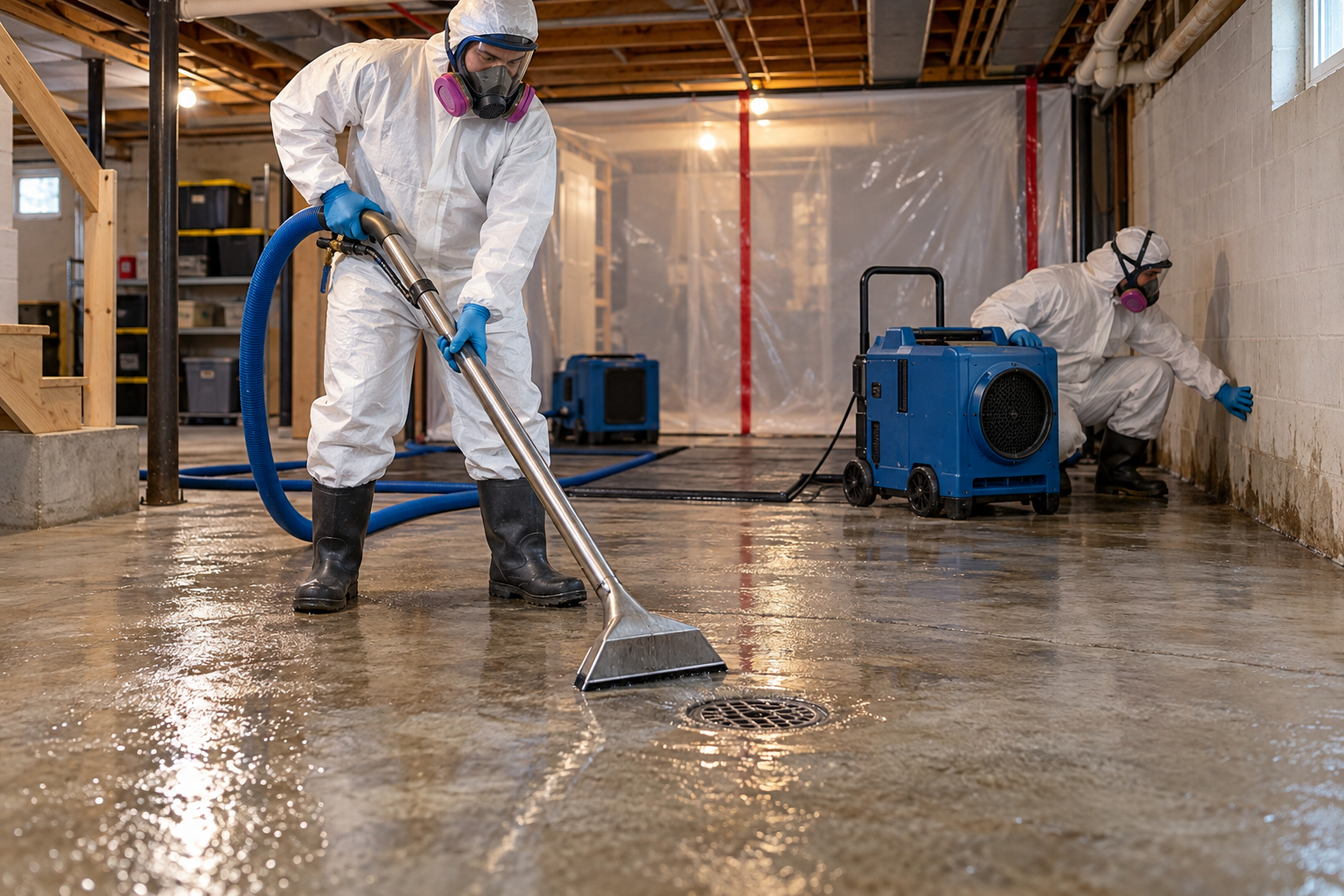
Trained technicians begin by establishing containment and using appropriate personal protective equipment. They extract standing water, identify the affected boundaries, and evaluate materials that absorbed contamination. Carpet, padding, insulation, and damaged drywall may require controlled removal, while suitable hard surfaces can be cleaned and treated with professional disinfectants. HEPA air scrubbing can help manage airborne particles during the work.
Drying and documentation complete the response
After extraction and sanitation, structural drying addresses moisture that may remain in framing, subflooring, and other assemblies. Moisture readings and photographs document the scope and drying progress. Coverage for a sewer backup varies by policy and cause, so homeowners should contact their insurer promptly and confirm what documentation is required. Repairing the source is equally important before damaged finishes are rebuilt.
If damp materials remain unresolved, conditions can support mold growth; professional mold remediation addresses a separate mold concern, and water damage restoration completes the drying where broader moisture is present.
Local help after a Southern Indiana storm
911 Restoration of Southern Indiana provides 24/7/365 sewage cleanup for homes and businesses across the region, including Jasper, Evansville, and Newburgh. Its biohazard-certified team can contain the affected area, remove sewage water, clean and disinfect appropriate surfaces, dry the structure, and help document the loss. Fast action can limit how far contaminated water and moisture travel.
Frequently Asked Questions
Why does heavy rain cause my basement drain to back up?
When stormwater overloads the municipal sewer or your line is partially blocked, pressure can push wastewater back through the lowest opening — often the basement floor drain.
The water drained away — is the area still contaminated?
Yes. Contaminated water can remain beneath flooring, behind baseboards and in porous materials long after the standing water is gone.
Does insurance cover sewage backup after heavy rain?
Coverage varies by policy and cause. We provide moisture readings, photos and documentation so you can confirm requirements with your insurer.
Need help now?
24/7 emergency response across Southern Indiana. On-site in 60 minutes.