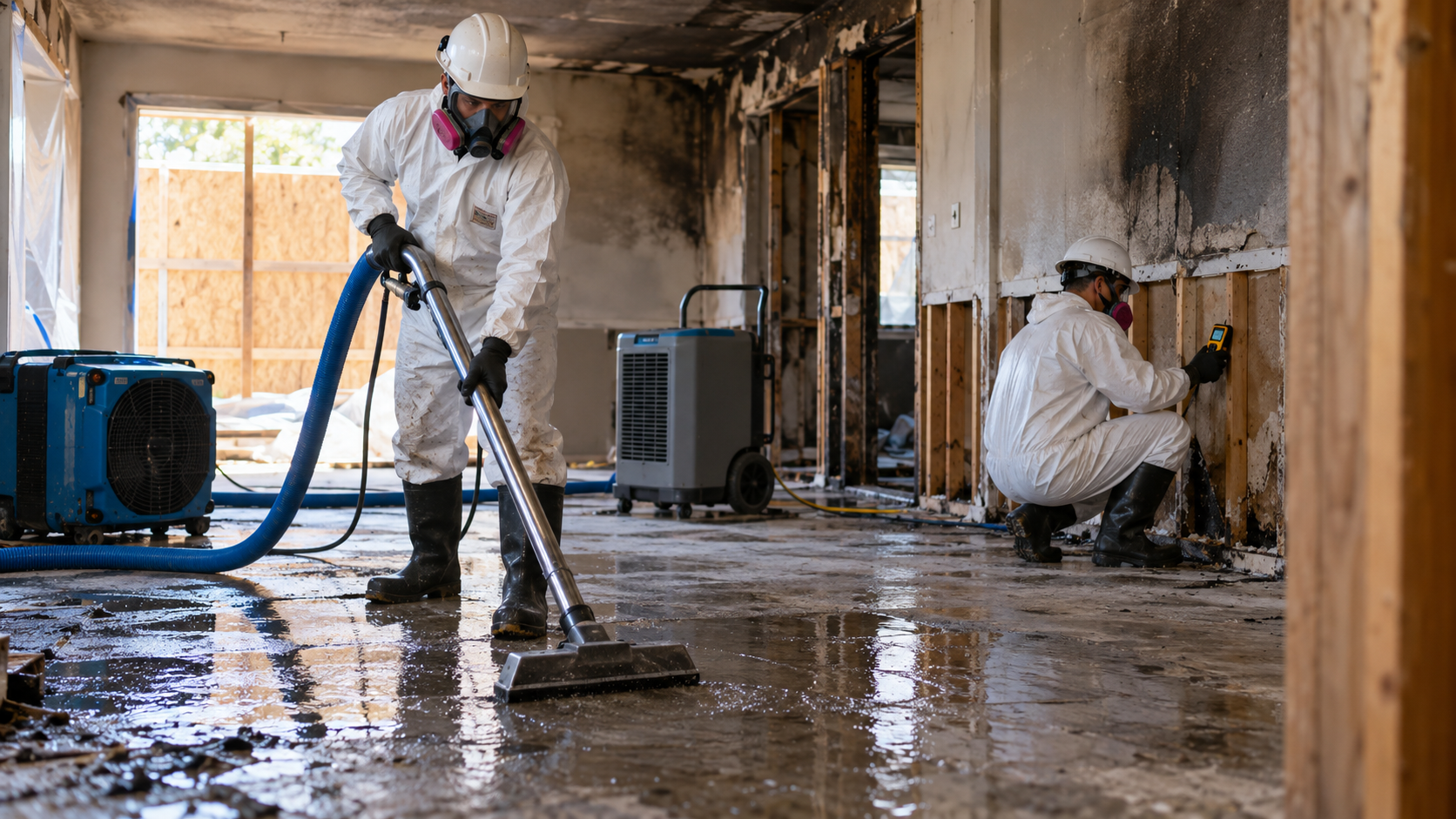
Once the fire is out, the property may still contain a second form of damage: the water used to suppress the flames. Hose water can spread through flooring, wall cavities, insulation, ceilings, and contents. Even rooms with limited burn damage may require moisture assessment and drying before smoke cleaning or reconstruction can move forward.
24/7 fire restoration across Southern Indiana
911 Restoration of Southern Indiana provides 24/7 fire and smoke damage restoration across Jasper, Evansville, Newburgh, Boonville, and nearby communities. The licensed and insured team handles emergency securing, soot and odor removal, water extraction, structural drying, content evaluation, reconstruction, and insurance documentation as connected parts of one recovery plan.
Fire and water damage overlap
Water can travel well beyond the room where firefighters concentrated their work. It may run down wall assemblies, collect beneath flooring, soak insulation, or enter lower levels. Surface water can be removed while moisture remains trapped in porous materials, which is why visual inspection alone may not show the full extent of the loss.
A restoration assessment can combine fire-damage inspection with moisture mapping. Technicians evaluate which areas require extraction, what materials can be dried, and whether damaged drywall, insulation, flooring, or cabinetry must be removed. The plan should account for structural safety and any restrictions placed by fire officials before work begins.
Drying should be coordinated with smoke cleanup
Drying equipment should not be placed without considering soot and ash. Uncontrolled air movement may distribute loose residue into spaces that were less affected. Restoration teams sequence containment, debris removal, cleaning, extraction, and drying so one part of the process does not make another part more difficult.
Board-up, soot removal, odor treatment, water mitigation, and rebuilding are all part of our fire damage restoration service. Keeping these services under one plan helps the team document how fire, smoke, and water affected each area of the property.
Moisture can affect materials and contents
Wet building materials may swell, warp, stain, or lose strength. Furniture, textiles, documents, and other belongings can also be affected by both smoke residue and water. Items should be photographed and inventoried before they are cleaned, packed out, or discarded. What can be restored depends on the material, contamination, heat exposure, and saturation.
When firefighting water reaches multiple rooms or levels, professional water damage restoration can include extraction, moisture monitoring, and structural drying. If damp materials remain unresolved, conditions may also support mold growth; we provide mold remediation when a separate mold concern is identified.
Document the full loss before repairs begin
Photographs, moisture readings, cleaning records, content inventories, and repair scopes can help explain the full loss to an insurance adjuster. Coverage varies by policy and circumstances, so property owners should confirm requirements directly with their carrier. Avoid disposing of damaged items or beginning cosmetic repairs before the damage has been assessed and documented.
For fire damage restoration in Southern Indiana, call 911 Restoration of Southern Indiana at 812-631-2171. The team is available day or night to secure the property, assess fire and water damage, and explain the next steps toward cleanup and reconstruction.
Frequently Asked Questions
Why does a fire cause water damage?
Firefighting hoses release large volumes of water that soak flooring, walls, insulation and lower levels of the home.
Do you handle both fire and water damage?
Yes — extraction, structural drying, soot cleanup and rebuilding are coordinated under one recovery plan.
Need help now?
24/7 emergency response across Southern Indiana. On-site in 60 minutes.