When water gets into your home, the next few days matter a lot. Whether it came from a burst supply line, a failed water heater, a roof leak during a storm, or a backed-up basement drain, water damage restoration in Evansville is about more than mopping up what you can see. Water moves into drywall, under flooring, and into framing, and if it is not dried properly it can cause problems that show up weeks later. Here is what Evansville homeowners can expect from the process, what you can do right now, and how to tell when it is time to call in help.
Common causes of water damage in Evansville homes
Evansville sits right on the Ohio River, and plenty of homes in the area have basements or crawl spaces close to damp soil. Add older plumbing in some houses, heavy spring storms, and the occasional hard winter freeze, and there are a lot of ways water can end up where it does not belong. Some of the most common sources we see include:
- Burst or leaking supply lines, especially after a cold snap
- Water heater, washing machine, and dishwasher failures
- Roof and window leaks during heavy storms
- Basement seepage after several days of rain
- Sump pump failures
- Toilet overflows and drain backups
What to do before help arrives
Your first job is to stay safe. If water is anywhere near outlets, appliances, or your electrical panel, do not walk through it. Shut off power at the breaker only if you can reach it from a dry spot. After that, a few simple steps can limit the damage:
- Turn off the main water valve if the source is a plumbing leak
- Take photos and video of every affected room before moving anything
- Move electronics, important papers, and rugs to a dry area
- Keep kids and pets out of the wet area
- Avoid contact with water that may be contaminated, such as water from a floor drain or toilet
The water damage restoration process in Evansville, step by step
Every home is a little different, but professional water damage restoration in Evansville generally follows the same core steps. Knowing them ahead of time can take some of the stress out of an already rough day.
Inspection and moisture mapping
Technicians start by finding the source and figuring out how far the water has traveled. Moisture meters and thermal imaging help show wet areas hiding behind walls and under floors, which is something you usually cannot see just by looking. This step shapes the rest of the plan.
Water extraction
Standing water is removed with professional extraction equipment. Getting as much water out as possible early makes the drying stage go more smoothly and helps protect materials that can still be saved.
Structural drying and monitoring
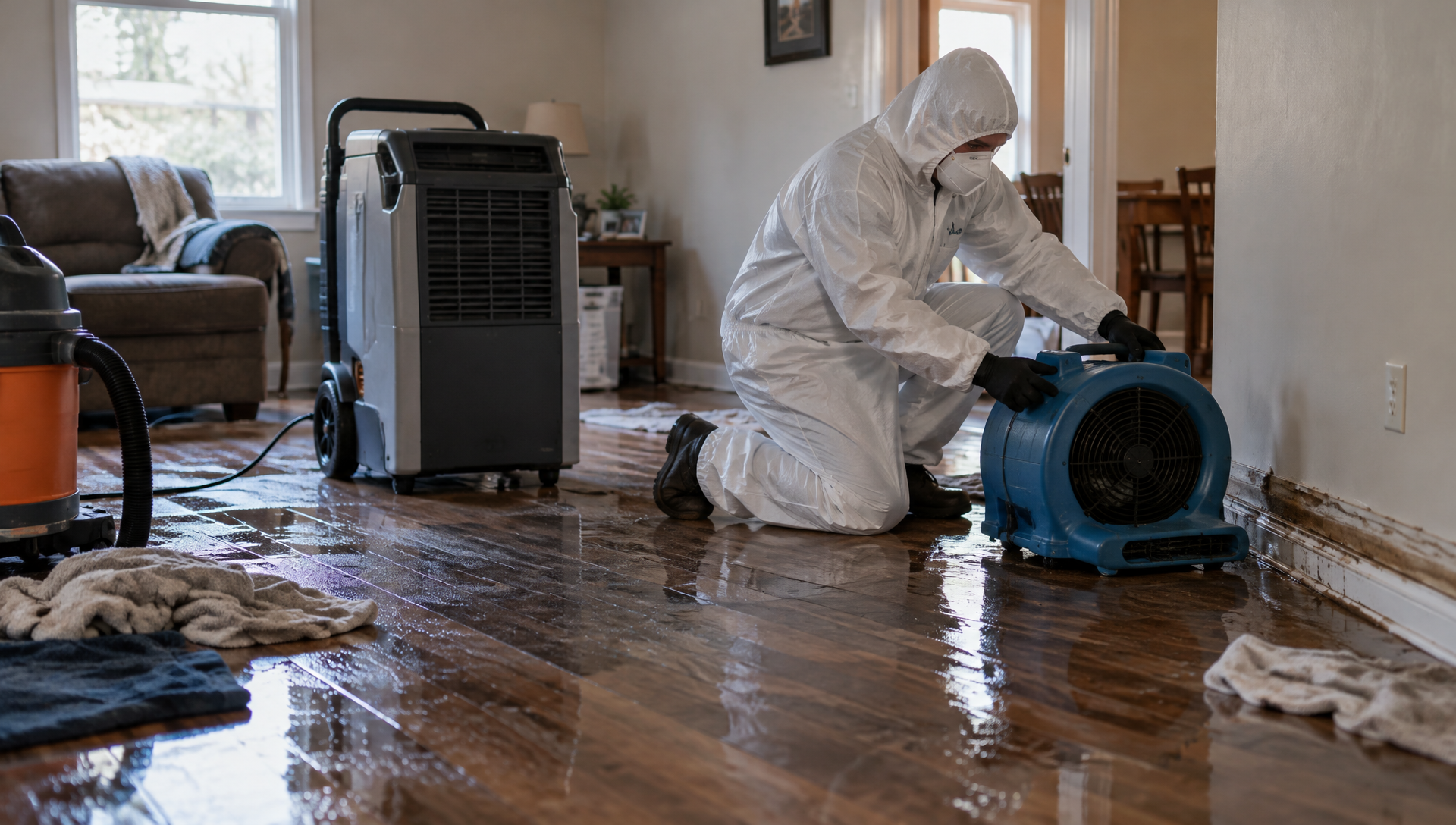
Air movers and dehumidifiers are set up to pull moisture out of drywall, subflooring, framing, and other materials. The team checks moisture readings as the job goes on, so drying is based on real measurements instead of guesswork. Wood and drywall can feel dry on the surface while still holding water inside, which is why monitoring matters so much.
Removal, cleaning, and repairs
Some materials, like soaked carpet pad, wet insulation, or swollen drywall, may need to be removed. Surfaces that can stay are cleaned, and once everything is dry, repairs can move forward so your home looks and feels like yours again.
Why fast drying helps prevent mold
Mold needs moisture to grow, and a wet wall cavity or damp subfloor gives it exactly that. Drying a home properly after a leak is one of the best ways to keep a water problem from turning into a mold problem. If you already notice a musty smell or visible growth, our mold remediation team can assess it and address the moisture behind it.
Hidden moisture under the floor is especially common around here. Our recent article on crawl space mold remediation in Southern Indiana walks through why crawl spaces near the river tend to stay damp and what a proper cleanup includes.
When water damage involves sewage or fire
Not all water is the same. Water from a backed-up floor drain or toilet may carry sewage, and that changes how the cleanup needs to be handled. In those cases, sewage backup cleanup comes first, with containment and disinfection before drying begins. If heavy rain was the trigger, our post on why heavy rain can trigger a sewage backup explains what is going on in the lines.
Water damage can also follow a house fire, since firefighting efforts can soak flooring, walls, and lower levels. That is why fire damage restoration often includes extraction and drying as part of one plan, something we cover in more detail in our article on firefighting water and fire damage restoration.
What about insurance?
Whether your homeowners policy helps with water damage depends on what caused it and how your policy is written. Sudden, accidental events are often treated differently than long-term leaks or outside flooding, and sewer backups and mold frequently have their own limits or exclusions. Call your insurer early, ask what they need from you, and hold on to your photos. Our team provides documentation of the damage and the work performed, but your insurance company makes the coverage decision.
Serving Evansville and nearby Southern Indiana communities
911 Restoration of Southern Indiana helps homeowners in Evansville and across the region, including Newburgh, Boonville, Mount Vernon, Chandler, Princeton, Jasper, and the surrounding towns. Whether it is a small leak under the kitchen sink or a basement full of water after a storm, our team can assess the damage, explain what we find in plain language, and lay out a plan to dry and restore your home.
If you need water damage restoration in Evansville, call 911 Restoration of Southern Indiana at 812-631-2171. We answer 24/7, every day of the year.
Frequently Asked Questions
How long does water damage restoration take in Evansville?
It depends on how much water was involved, which materials got wet, and how long they stayed wet. The team tracks moisture readings until materials are back to normal levels, and then repairs can begin.
Can I dry out water damage myself with fans?
Fans can help with a small surface spill, but they often miss moisture trapped inside walls, under flooring, and in framing. Professional equipment and moisture monitoring help confirm everything is truly dry.
Does homeowners insurance cover water damage in Indiana?
Coverage varies by policy and cause. Sudden, accidental water damage is often handled differently than gradual leaks or outside flooding, so check with your insurer and keep photos of the damage.
Need help now?
24/7 emergency response across Southern Indiana. On-site in 60 minutes.